
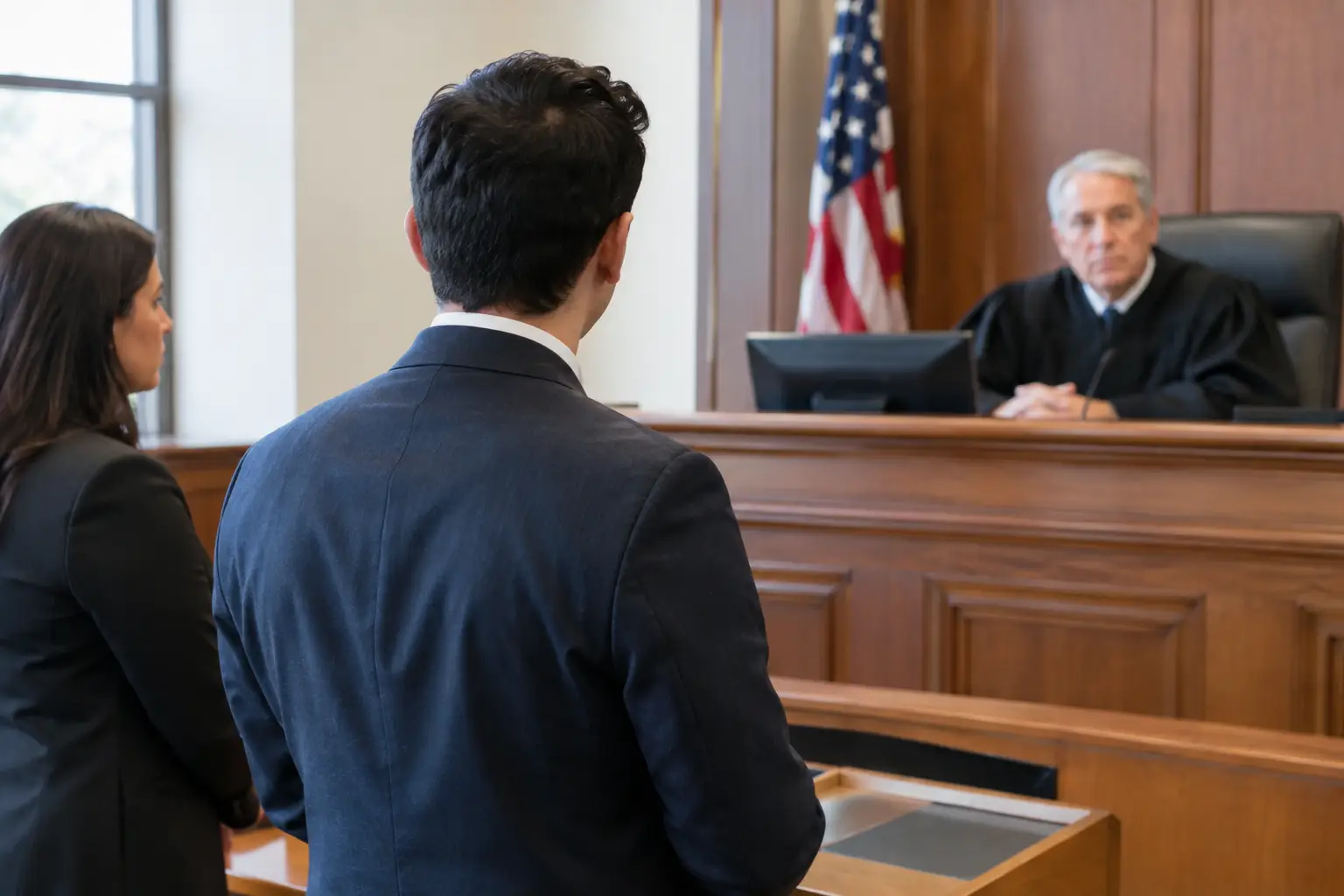
A criminal case can feel as though it starts moving before you have had time to absorb the arrest, the accusation, or the pressure on your family. The arraignment hearing process is often the first court appearance where the case becomes formal. What happens at that hearing can affect your release conditions, the direction of the case, and the time available to build a defense.
Do not mistake arraignment for a routine paperwork date. The prosecution has begun its case. You need to understand the accusation, protect your rights, and avoid decisions that create unnecessary damage to your freedom, record, career, or reputation.
What Is an Arraignment Hearing?
In California, an arraignment is generally the first formal appearance after a prosecutor files a criminal complaint. It may take place soon after an arrest if you are in custody, or weeks later if you receive a notice to appear or a summons. The timing depends on the charge, custody status, the court’s calendar, and how the case was initiated.
At this hearing, the judge confirms the charge or charges against you and advises you of key constitutional rights. The court will also address whether you have an attorney, enter a plea, and may make decisions about bail, release, and protective orders.
An arraignment is not a trial. The judge does not hear all the evidence, decide guilt, or allow a complete defense presentation at this stage. But the choices made here can shape what happens next. A not-guilty plea, for example, keeps the case moving toward evidence review, negotiations, motions, or trial. A guilty or no-contest plea can carry immediate and lasting consequences.
The Arraignment Hearing Process Step by Step
Court procedures vary by county and by the type of case, but most California arraignments follow a similar path.
The court identifies the case and charges
The judge will identify you and state the charge or charges listed in the complaint. In a busy courtroom, the allegations may be summarized rather than read word for word. Do not assume that a short explanation means the charge is minor. A misdemeanor DUI, domestic violence allegation, theft case, drug allegation, or felony charge can each trigger consequences far beyond the courtroom.
The complaint may not reveal the full prosecution file. Police reports, witness statements, body-camera footage, forensic testing, dispatch records, and other evidence may become available later through the discovery process. That is one reason an arraignment is too early to make assumptions about the strength of the case.
You are advised of your rights
The court will advise you of rights that include the right to an attorney, the right to remain silent, the right to a jury trial, the right to confront witnesses, and the right to present a defense. If you cannot afford counsel, the court may address whether you qualify for a public defender.
You do not need to explain the facts of your case to the judge at arraignment. Statements made under pressure can be misunderstood, repeated by the prosecution, or used to limit defense options later. A focused defense begins with knowing when to speak and when not to volunteer information.
The court addresses legal representation
If you have retained counsel, your attorney can appear with you and protect your position from the outset. If you need time to hire an attorney, the court may grant a continuance depending on the circumstances. When someone is in custody or facing urgent release issues, delay can be costly.
An experienced criminal defense lawyer can begin examining the complaint, pursuing discovery, and identifying immediate problems with the prosecution’s approach. A former prosecutor understands that charging decisions are often only the opening move, not the final word on what the evidence can prove.
A plea is entered
The usual arraignment plea in a contested criminal case is not guilty. This is not a claim that every fact has already been disproven. It is a formal response that preserves the right to investigate, challenge evidence, negotiate from an informed position, and take the case to trial if necessary.
A guilty or no-contest plea should never be treated as a quick way to make the case disappear. Depending on the allegation, it can lead to custody, probation, fines, a criminal record, immigration consequences, professional licensing problems, firearm restrictions, driver’s license consequences, and restrictions affecting your home or children.
There are narrow situations where an early resolution may be strategic. That depends on the actual evidence, prior record, collateral consequences, available alternatives, and the terms being offered. It is not a decision to make without a clear understanding of what you are giving up.
Bail and release conditions may be decided
If you are in custody, the court may decide whether to keep bail, reduce it, increase it, release you on your own recognizance, or impose conditions of release. The judge may consider the seriousness of the allegation, prior history, community ties, alleged risk to a person or the public, and whether the court believes you will return for future dates.
Release conditions can be strict. They may include stay-away orders, no-contact orders, travel limits, alcohol monitoring, drug testing, firearms restrictions, or orders to obey all laws. In domestic violence cases especially, a criminal protective order can bar contact with a spouse, partner, child, or household member. Violating that order can lead to a new arrest and make the original case harder to defend.
If a condition interferes with work, housing, child care, or essential family contact, raise the issue through counsel. The right request, supported by specific facts, may help create a workable solution without putting anyone at risk.
What Happens After Arraignment?
After arraignment, the court usually sets the next hearing. In a misdemeanor case, that may be a pretrial conference. In a felony case, the matter can move toward a preliminary hearing, where the prosecution must show sufficient evidence to continue the case. The exact sequence depends on the charge, county procedures, and whether there are negotiations or motions.
This is where real defense work accelerates. Counsel can request and analyze evidence, identify missing or unreliable proof, assess constitutional issues, interview witnesses, and challenge improper police conduct. In a DUI case, that may mean examining the traffic stop, field sobriety testing, breath or blood results, and the separate DMV license timeline. In a theft or drug case, it may mean questioning identification, possession, search procedures, surveillance footage, or laboratory analysis.
The prosecution has the burden to prove guilt beyond a reasonable doubt. A criminal defense strategy should test every link in that chain, not simply accept the police version of events as complete or accurate.
What You Should Do Before Your Court Date
Start by reading every document you received and confirming the date, courthouse, and department. Missing arraignment can result in a bench warrant, added complications, and loss of control over your situation.
Do not contact an alleged victim or witness to explain, apologize, persuade, or clear up a misunderstanding if a protective order exists or if the contact could be viewed as pressure. Do not post about the case, argue about it by text, or try to coordinate stories with others involved. Preserve potentially helpful information instead, including messages, photographs, call logs, videos, receipts, location data, and names of witnesses.
If you were arrested for DUI, act immediately on any DMV paperwork. The administrative license process is separate from the criminal case and may have a short deadline to request a hearing. Waiting for arraignment can mean losing an opportunity to challenge an automatic suspension.
Arrive early, dress respectfully, and prepare for security screening and waiting time. Those details do not decide a case, but failing to appear or violating a court instruction can create avoidable problems.
Why Early Defense Action Matters
The period around arraignment is when the prosecution’s narrative can harden. Officers have written reports, but memories fade, surveillance footage can be erased, witnesses become harder to locate, and release conditions can disrupt a person’s life long before a case reaches trial.
Prompt legal representation creates an opportunity to preserve evidence and confront weaknesses before they are buried under assumptions. At The Logrue Law Firm, the focus is not on offering false promises. It is on acting quickly, scrutinizing the prosecution’s case, and fighting for the client behind the accusation.
Your arraignment is a moment to take the case seriously, not to surrender to fear. Get clear advice before you enter a plea, understand every release condition, and make decisions that protect the future you are still fighting for.
Disclaimer: The information provided in this blog is for general informational and educational purposes only and does not constitute legal advice or create an attorney-client relationship. Every legal matter is different, and the law may change over time. You should consult with a qualified attorney regarding your specific circumstances before taking or refraining from any action based on information contained in this article. No attorney-client relationship is formed by reading this blog, contacting The Logrue Law Firm through this website, or submitting an inquiry through this website.